
Home is More Than A Place
Attachment, Relationships and the Need to Feel Safe
Mike’s Monthly Thoughts and Reflections
Connection is why we’re here; it is what gives purpose and meaning to our lives.
Brené Brown
Last month, in Pause for Thought, I reflected on Identity and how our experiences, relationships, values and roles shape who we are. Person-centred care begins when we move beyond labels and take time to understand the person behind dementia.
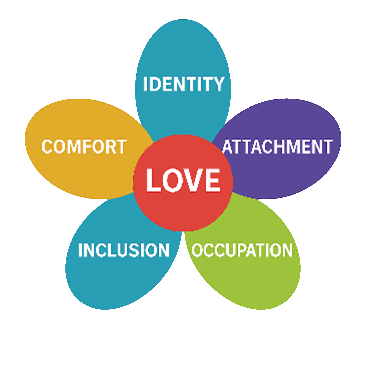
This month I want to stay with Tom Kitwood’s flower metaphor and explore another petal: Attachment.
A few weeks ago, I found myself thinking about what makes somewhere feel like home.
When I first moved to London, I often returned to Wales whenever I could. It was not really the place itself that drew me back, but the sense of connection and belonging.
Over time I have realised that home is often more than a physical place. Home can be a person who makes us feel safe, a relationship that grounds us, a routine that reassures us, or a community where we belong.
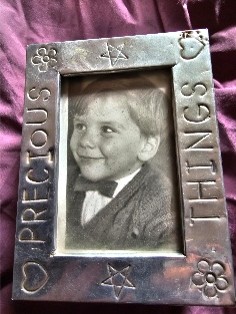
Attachment is not only about people. We can become attached to places and possessions too. I have a “Precious Things Box” containing items such as my late father’s tie, my great-grandfather’s pipe and a miniature Guinness bottle given to me when I was born by a resident from the residential home where I grew up.
To anyone else they may seem ordinary, but to me they represent memories, relationships and stories. If I ever moved into a care home myself, these are exactly the sorts of things I would want around me.

Attachment Is a Lifelong Human Need
Attachment Theory, developed by John Bowlby and expanded by Mary Ainsworth, suggests that human beings need meaningful connections to feel safe, secure and emotionally supported.
Although often associated with childhood, attachment remains important throughout life, particularly during periods of illness, loss, trauma or change. Bowlby described the need for both a secure base from which we can engage with the world and a safe haven to return to when life feels difficult.
When uncertainty increases, people often seek what is familiar. Dementia can bring a great deal of uncertainty.
Mrs Khan’s Handbag
Many years ago, a care worker told me about Mrs Khan, who carried her handbag everywhere. Concerned that it might be lost, staff put it somewhere “safe”. Mrs Khan became extremely distressed.
When staff explored her life story, they discovered that carrying a handbag had been part of her daily life for decades. The handbag represented familiarity, independence and security.
Attachment theory encourages a different question. Instead of asking, “How do we stop this behaviour?” we might ask, “What helps this person feel safe?” The handbag was not the problem. It was part of the solution.
Attachment and Tom Kitwood’s Flower
Attachment sits alongside Identity, Comfort, Inclusion and Occupation, with Love at the centre of Kitwood’s flower. These needs are deeply interconnected.
For people living with dementia, changes in memory and confidence may make relationships even more important.
Repeatedly asking for family members, following staff, becoming distressed by change or seeking reassurance can often be understood as expressions of a need for security and connection rather than simply symptoms of dementia.
People may not remember every conversation, but they can still experience trust, warmth, comfort and emotional safety.
Why this matters now
Good dementia care is about more than completing tasks. It is also about helping people feel safe, valued and connected.
When staff build relationships, families remain involved, routines are respected and support is delivered with warmth and compassion, attachment needs are more likely to be met.
Often it is the small things that matter most: a familiar voice, a warm greeting, using someone’s preferred name, listening attentively or remembering something important about their life.
These simple actions communicate a powerful message: “You matter.”
Final reflections
Last month I suggested that belonging begins with being seen. This month I find myself wondering whether feeling safe begins with feeling connected.
The longer I work in health and social care, the more convinced I become that relationships are the foundation upon which everything else is built.
For people living with dementia, the need for connection does not disappear.
If anything, it may become even more important.
Perhaps attachment is not simply about who we remember. Perhaps it is about who helps us feel safe, valued and able to belong.
And perhaps one of the greatest gifts we can offer another person is to become, even briefly, a source of reassurance in an uncertain world.
Because while dementia may affect memory, it does not remove the human need for connection.
Where there is genuine connection, there remains the possibility of comfort, belonging and hope.
I believe the greatest gift I can conceive of having from anyone is to be seen by them, heard by them, to be understood and touched by them.
Virginia Satir
Over to you to Release Your Potential
Consider:
Stay Connected
If you would like training or coaching or consultancy that would help your organisation with these issues, I offer a broad range of courses.
Book a Discovery Call and explore your learning and development needs. It’s a friendly, no-pressure conversation focussed on your goals, challenges and the outcomes you want to achieve.


This is great! Look forward to putting so much of this into practice. Thanks Mike.