
Oi, Queer! You’re Dead
History, Identity, Belonging and LGBT+ Inclusion
Mike’s Monthly Thoughts and Reflections
History is not the past. It is the present.
James Baldwin
We carry our histories with us.

“Oi, Queer… those were the words shouted at me by a group of around six men when I was 23. They chased me into a secluded mews near Earl’s Court. At least two of them were carrying baseball bats.
The full sentence was: “We’re going to f*ing kill you.”
As a young gay man from Wales, briefly visiting London and not knowing the area well, I was petrified. I genuinely believed I was going to come to serious harm. Somehow, I managed to escape. I’m able to tell this story 26 years later.
I do not share it to shock, but to explain. Experiences like this were common for many gay people in 1990 and in the decades before. It was called “queer bashing”. Some people did it for fun.
That is why I still find the word queer difficult. For me, it is tied to fear, violence and trauma.
Younger LGBT+ people today often reclaim the word as a badge of pride, something I can understand and respect. But words carry histories, and for some people, particularly older LGBT+ adults, they remain powerful triggers.
This is something I will explore openly and carefully during NAPA’s upcoming course Providing LGBT+ Inclusive Activities in Care Homes.
Progress, Pride and the risk of superficial inclusion
June brings Pride celebrations across the UK, and I am genuinely heartened by how many care homes want to be more LGBT+ inclusive in their activities and environments.
Rainbow cakes, flags in the garden and stickers in reception spaces are all welcome signals. They matter. They say something has shifted.
But LGBT+ inclusion cannot stop there.
As we will explore during the course, inclusion is not simply about visibility. It is about safety, dignity and understanding the life experiences people bring with them into care.
The lived history many older LGBT+ people carry
At 59, I feel I have lived and worked through a significant part of LGBT+ history. Many people living in care settings today lived through even more.
Until 1967 it was illegal to be a gay man. Many met partners in secret. Some lost families, jobs and homes. One man in his 80s told me he was subjected to electric shock treatment – an attempt to “cure” him.
My own uncle and his partner slept in separate beds for years because of the fear of police raids. Even after his partner died, that habit remained.
Some lesbian women lost their children following divorce. The woman in your care setting who calls out repeatedly for children she “never had” may have a very different story behind her care plan.
Media portrayals were often hostile or mocking. Growing up, I remember headlines portraying gay people as dangerous, predatory or shameful. The language used then echoes uncomfortably with the words now aimed at trans people.
In the late 1980s this stigma was compounded by the HIV crisis and by Section 28.
Although the law was never used, its message to young people like me was clear: you are wrong, you should not be spoken about, and you do not belong.
Why this matters now
While we have come a long way since the violence I experienced in 1990, prejudice has not disappeared. It has shifted.
Today, trans people, in particular, are facing increased hostility. A neighbour of mine, a trans woman in her seventies who has lived on our street for decades, recently told me how unsafe she has begun to feel in everyday life.
This matters deeply in care settings.
People we support may carry painful memories that can be triggered by well‑intentioned activities if we are not thoughtful and prepared. An LGBT+ quiz, discussion or celebration might bring up trauma as well as pride.
This is not a reason not to be inclusive. It is a reason to do inclusion properly.
Why this course exists
Alongside my professional work, I bring lived experience to this training. I was diagnosed with HIV in 1990, the same year as the assault I described earlier. By the age of 25, I had lost around 50 friends and acquaintances. From one group of young people I belonged to, only two of us are still alive.
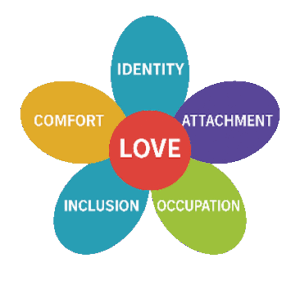
I share this not for sympathy, but because identity matters.
Tom Kitwood’s work on dementia reminds us that identity and inclusion are fundamental human needs. If I reach a point where I need care, I want the people supporting me to know all of who I am, not just parts that feel comfortable.
That is no different from anyone else.
Final reflections
Being LGBT+ inclusive requires courage. It means acknowledging progress while also recognising pain. It means being prepared to challenge prejudice, support LGBT+ people we care for and staff, and put psychological safeguards in place.
For leaders, it means having the right policies, procedures and culture so inclusion is everyone’s responsibility, not an optional extra.
True inclusion is not easy. But with the right understanding and support, it becomes possible.
And it matters.
Be who you are and say what you feel, because those who mind don’t matter, and those who matter don’t mind.
Bernard M. Baruch
As Pride approaches, this feels like a good moment to pause and ask: what histories might the people we support be carrying with them, and how can we honour all of who they are?
Over to you to Release Your Potential
Consider:
Stay Connected
If you would like training or coaching or consultancy that would help your organisation with these issues, I offer a broad range of courses.
Book a Discovery Call and explore your learning and development needs. It’s a friendly, no-pressure conversation focussed on your goals, challenges and the outcomes you want to achieve.


This is great! Look forward to putting so much of this into practice. Thanks Mike.